
Business Type
Manufacturer
Catalog Products
4 Active Items
Year Established
—
Location
India
About D. K OVERSEAS
No detailed business statement provided.
Product Showcase4 items
Explore our inventory catalog. Instant quotes available.
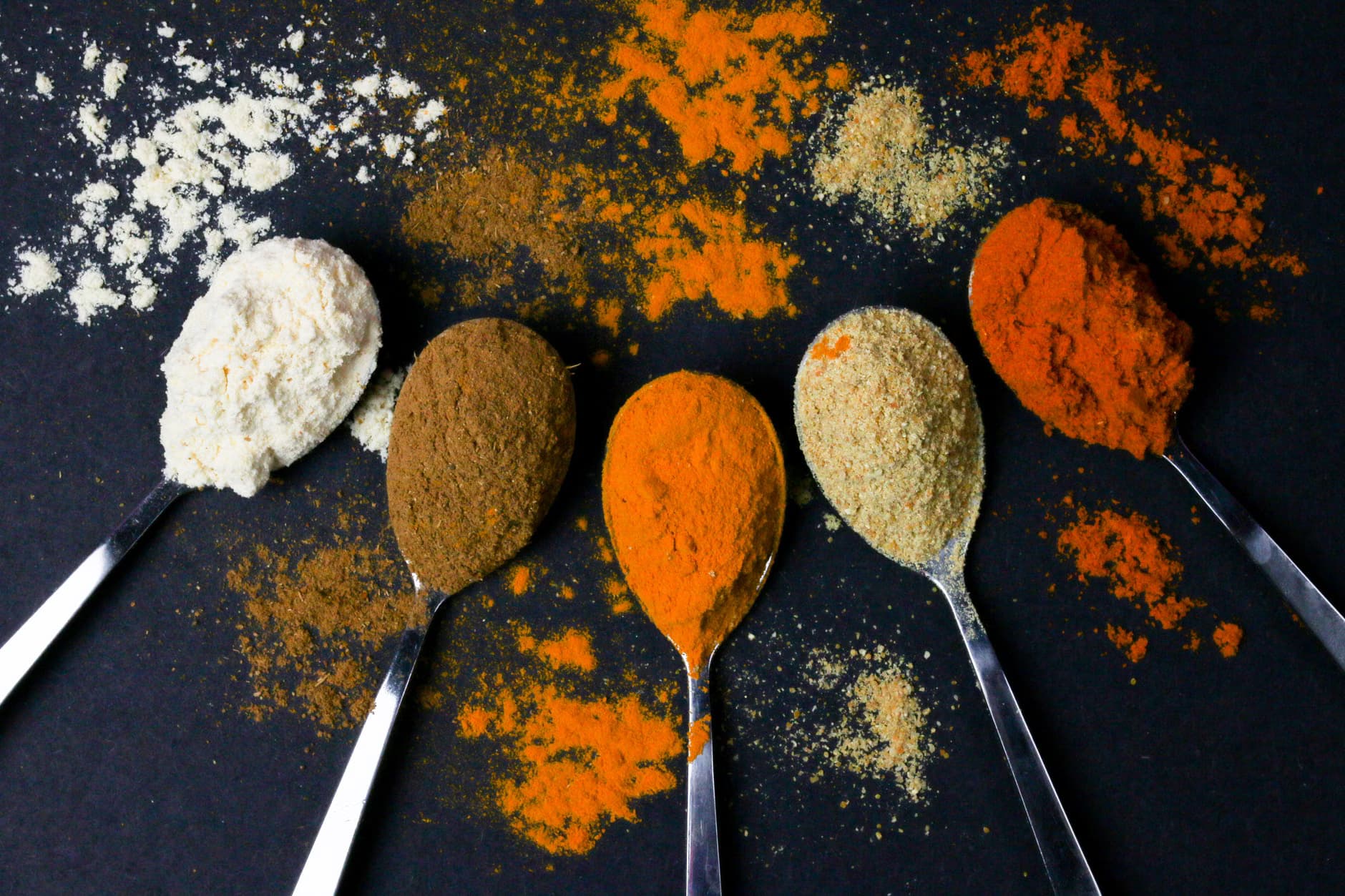
coriander powder
Coriander (/ˌkɒriˈændər, ˈkɒriændər/;[1] Coriandrum sativum) is an annual herb in the family Apiaceae. It is also known as Chinese parsley, dhania, or cilantro (/sɪˈlæntroʊ, -ˈlɑːn-/).[2] All parts of the plant are edible, but the fresh leaves and the dried seeds (which are both a herb and a spice) are the parts most traditionally used in cooking. Most people perceive coriander as having a tart, lemon/lime taste, but to nearly a quarter of those surveyed, the leaves taste like dish soap, linked to a gene that detects some specific aldehydes that can produce soapy sensation from the odorant substances.Coriander is native to regions spanning from Southern Europe and Northern Africa to Southwestern Asia. It is a soft plant growing to 50 cm (20 in) tall. The leaves are variable in shape, broadly lobed at the base of the plant, and slender and feathery higher on the flowering stems. The flowers are borne in small umbels, white or very pale pink, asymmetrical, with the petals pointing away from the center of the umbel longer (5–6 mm or 3⁄16–1⁄4 in) than those pointing toward it (only 1–3 mm or 1⁄16–1⁄8 in long). The fruit is a globular, dry schizocarp 3–5 mm (1⁄8–3⁄16 in) in diameter.[4] Pollen size is approximately 30 μm (0.0012 in).[5]
D. K OVERSEAS
coriander powder
ManufacturerAsk for Price
Coriander (/ˌkɒriˈændər, ˈkɒriændər/;[1] Coriandrum sativum) is an annual herb in the family Apiaceae. It is also known as Chinese parsley, dhania, or cilantro (/sɪˈlæntroʊ, -ˈlɑːn-/).[2] All parts of the plant are edible, but the fresh leaves and the dried seeds (which are both a herb and a spice) are the parts most traditionally used in cooking. Most people perceive coriander as having a tart, lemon/lime taste, but to nearly a quarter of those surveyed, the leaves taste like dish soap, linked to a gene that detects some specific aldehydes that can produce soapy sensation from the odorant substances.Coriander is native to regions spanning from Southern Europe and Northern Africa to Southwestern Asia. It is a soft plant growing to 50 cm (20 in) tall. The leaves are variable in shape, broadly lobed at the base of the plant, and slender and feathery higher on the flowering stems. The flowers are borne in small umbels, white or very pale pink, asymmetrical, with the petals pointing away from the center of the umbel longer (5–6 mm or 3⁄16–1⁄4 in) than those pointing toward it (only 1–3 mm or 1⁄16–1⁄8 in long). The fruit is a globular, dry schizocarp 3–5 mm (1⁄8–3⁄16 in) in diameter.[4] Pollen size is approximately 30 μm (0.0012 in).[5]

D. K OVERSEAS
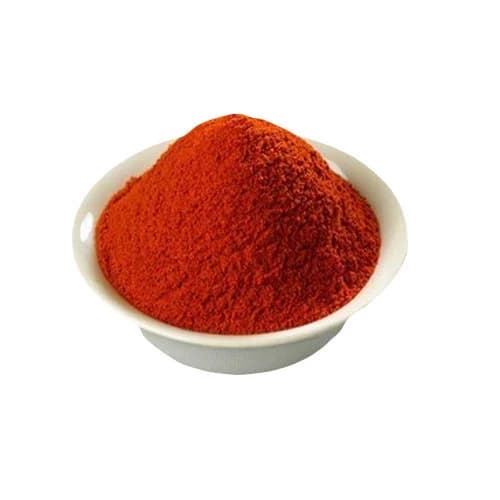
Red chilli powder
Chili powder (also spelled chile, chilli, or, alternatively, powdered chili) is the dried, pulverized fruit of one or more varieties of chili pepper, sometimes with the addition of other spices (where it is also sometimes known as chili powder blend or chili seasoning mix).[1] It is used as a spice (or spice blend) to add pungency (piquancy) and flavor to culinary dishes. In American English, the spelling is usually "chili"; in British English, "chilli" (with two "l"s) is used consistently. Chili powder is used in many different cuisines, including American (particularly Tex-Mex), Chinese, Indian, Bangladeshi, Korean, Mexican, Portuguese, and Thai. A chili powder blend is the primary flavor in American chili con carne
D. K OVERSEAS
Red chilli powder
ManufacturerAsk for Price
Chili powder (also spelled chile, chilli, or, alternatively, powdered chili) is the dried, pulverized fruit of one or more varieties of chili pepper, sometimes with the addition of other spices (where it is also sometimes known as chili powder blend or chili seasoning mix).[1] It is used as a spice (or spice blend) to add pungency (piquancy) and flavor to culinary dishes. In American English, the spelling is usually "chili"; in British English, "chilli" (with two "l"s) is used consistently. Chili powder is used in many different cuisines, including American (particularly Tex-Mex), Chinese, Indian, Bangladeshi, Korean, Mexican, Portuguese, and Thai. A chili powder blend is the primary flavor in American chili con carne
D. K OVERSEAS
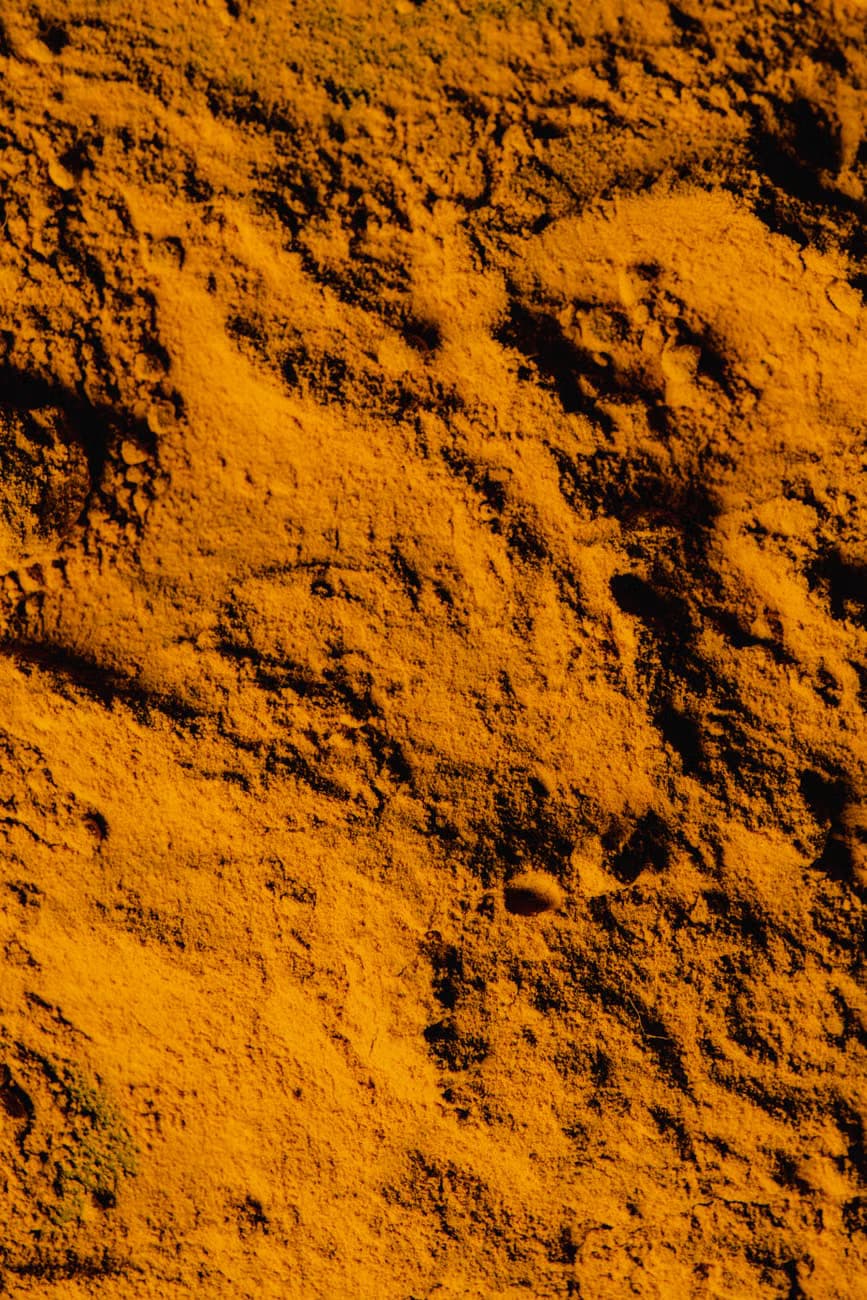
Turmeric Powder
Turmeric (/ˈtɜːrmərɪk, ˈtjuː-/)[2][3] is a flowering plant, Curcuma longa, of the ginger family, Zingiberaceae, the rhizomes of which are used in cooking.[1] The plant is a perennial, rhizomatous, herbaceous plant native to the Indian subcontinent and Southeast Asia that requires temperatures between 20 and 30 °C (68 and 86 °F) and a considerable amount of annual rainfall to thrive. Plants are gathered each year for their rhizomes, some for propagation in the following season and some for consumption. The rhizomes are used fresh or boiled in water and dried, after which they are ground into a deep orange-yellow powder commonly used as a coloring and flavoring agent in many Asian cuisines, especially for curries, as well as for dyeing, characteristics imparted by the principal turmeric constituent, curcumin.[4] Turmeric powder has a warm, bitter, black pepper-like flavor and earthy, mustard-like aroma.[5][6] Curcumin, a bright yellow chemical produced by the turmeric plant, is approved as a food additive by the World Health Organization, European Parliament, and United States Food and Drug Administration.[4] Although long used in Ayurvedic medicine, where it is also known as haridra,[7] there is no high-quality clinical evidence that consuming turmeric or curcumin is effective for treating any disease.[8][9]
D. K OVERSEAS
Turmeric Powder
ManufacturerAsk for Price
Turmeric (/ˈtɜːrmərɪk, ˈtjuː-/)[2][3] is a flowering plant, Curcuma longa, of the ginger family, Zingiberaceae, the rhizomes of which are used in cooking.[1] The plant is a perennial, rhizomatous, herbaceous plant native to the Indian subcontinent and Southeast Asia that requires temperatures between 20 and 30 °C (68 and 86 °F) and a considerable amount of annual rainfall to thrive. Plants are gathered each year for their rhizomes, some for propagation in the following season and some for consumption. The rhizomes are used fresh or boiled in water and dried, after which they are ground into a deep orange-yellow powder commonly used as a coloring and flavoring agent in many Asian cuisines, especially for curries, as well as for dyeing, characteristics imparted by the principal turmeric constituent, curcumin.[4] Turmeric powder has a warm, bitter, black pepper-like flavor and earthy, mustard-like aroma.[5][6] Curcumin, a bright yellow chemical produced by the turmeric plant, is approved as a food additive by the World Health Organization, European Parliament, and United States Food and Drug Administration.[4] Although long used in Ayurvedic medicine, where it is also known as haridra,[7] there is no high-quality clinical evidence that consuming turmeric or curcumin is effective for treating any disease.[8][9]
D. K OVERSEAS
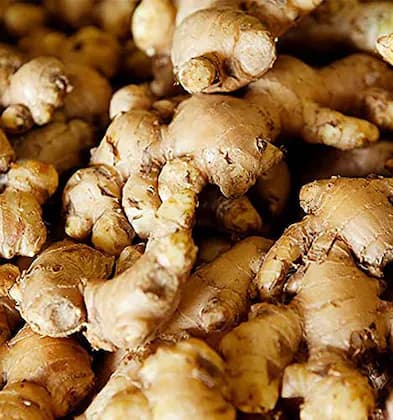
Ginger
Ginger (Zingiber officinale) is a flowering plant whose rhizome, ginger root or ginger, is widely used as a spice and a folk medicine.[2] It is a herbaceous perennial which grows annual pseudostems (false stems made of the rolled bases of leaves) about one meter tall bearing narrow leaf blades. The inflorescences bear flowers having pale yellow petals with purple edges, and arise directly from the rhizome on separate shoots.[3] Ginger is in the family Zingiberaceae, which also includes turmeric (Curcuma longa),[4] cardamom (Elettaria cardamomum), and galangal. Ginger originated in Maritime Southeast Asia and was likely domesticated first by the Austronesian peoples. It was transported with them throughout the Indo-Pacific during the Austronesian expansion (c. 5,000 BP), reaching as far as Hawaii. Ginger is one of the first spices to have been exported from Asia, arriving in Europe with the spice trade, and was used by ancient Greeks and Romans.[5] The distantly related dicots in the genus Asarum are commonly called wild ginger because of their similar taste. Although used in traditional medicine and as a dietary supplement, there is no good evidence that consuming ginger or its extracts has any effect on human health or as a treatment for diseases.[2][6] In 2019, world production of ginger was 4.1 million tonnes, led by India with 44% of the world total.
D. K OVERSEAS
Ginger
ManufacturerAsk for Price
Ginger (Zingiber officinale) is a flowering plant whose rhizome, ginger root or ginger, is widely used as a spice and a folk medicine.[2] It is a herbaceous perennial which grows annual pseudostems (false stems made of the rolled bases of leaves) about one meter tall bearing narrow leaf blades. The inflorescences bear flowers having pale yellow petals with purple edges, and arise directly from the rhizome on separate shoots.[3] Ginger is in the family Zingiberaceae, which also includes turmeric (Curcuma longa),[4] cardamom (Elettaria cardamomum), and galangal. Ginger originated in Maritime Southeast Asia and was likely domesticated first by the Austronesian peoples. It was transported with them throughout the Indo-Pacific during the Austronesian expansion (c. 5,000 BP), reaching as far as Hawaii. Ginger is one of the first spices to have been exported from Asia, arriving in Europe with the spice trade, and was used by ancient Greeks and Romans.[5] The distantly related dicots in the genus Asarum are commonly called wild ginger because of their similar taste. Although used in traditional medicine and as a dietary supplement, there is no good evidence that consuming ginger or its extracts has any effect on human health or as a treatment for diseases.[2][6] In 2019, world production of ginger was 4.1 million tonnes, led by India with 44% of the world total.
D. K OVERSEAS
Business Reviews & Ratings
Verified ratings and feedback from corporate clients sourcing from D. K OVERSEAS.
Based on 0 Reviews
Supplier Performance
Loading reviews...
Corporate Factsheet
| Corporate Name | D. K OVERSEAS |
| Company CEO | Animesh Boruah |
| Year Established | 2024 |
| Registered Address | KUSUM VILLA, WONDERS CLUBHAIDAR PARA,SILIGURI,JALPAIGURI,WEST BENGAL,,734006 |
Direct Supplier Lead
Send business requirements directly to the owner.