
Business Type
Manufacturer
Catalog Products
5 Active Items
Year Established
—
Location
India
About Team Green
No detailed business statement provided.
Product Showcase5 items
Explore our inventory catalog. Instant quotes available.
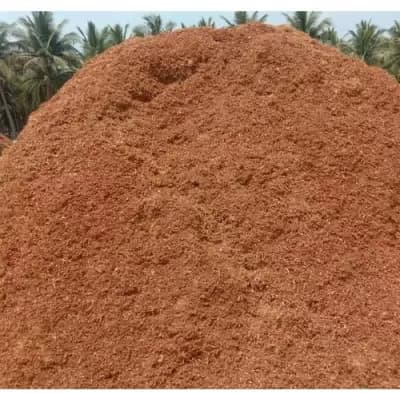
Coconut Peat
Coir From other capitalisation: This is a redirect from a title with another method of capitalisation. It leads to the title in accordance with the Wikipedia naming conventions for capitalisation, or it leads to a title that is associated in some way with the conventional capitalisation of this redirect title. This may help writing, searching and international language issues. If this redirect is an incorrect capitalisation, then {{R from miscapitalisation}} should be used instead, and pages that use this link should be updated to link directly to the target. Miscapitalisations can be tagged in any namespace. Use this rcat to tag only mainspace redirects; when other capitalisations are in other namespaces, use {{R from modification}} instead.
Team Green
Coconut Peat
ManufacturerAsk for Price
Coir From other capitalisation: This is a redirect from a title with another method of capitalisation. It leads to the title in accordance with the Wikipedia naming conventions for capitalisation, or it leads to a title that is associated in some way with the conventional capitalisation of this redirect title. This may help writing, searching and international language issues. If this redirect is an incorrect capitalisation, then {{R from miscapitalisation}} should be used instead, and pages that use this link should be updated to link directly to the target. Miscapitalisations can be tagged in any namespace. Use this rcat to tag only mainspace redirects; when other capitalisations are in other namespaces, use {{R from modification}} instead.

Team Green

Coconut Shell Charcoal
Biomass briquettes are a biofuel substitute to coal and charcoal. Briquettes are mostly used in the developing world, where cooking fuels are not as easily available. There has been a move to the use of briquettes in the developed world, where they are used to heat industrial boilers in order to produce electricity from steam. The briquettes are cofired with coal in order to create the heat supplied to the boiler.
Team Green
Coconut Shell Charcoal
ManufacturerAsk for Price
Biomass briquettes are a biofuel substitute to coal and charcoal. Briquettes are mostly used in the developing world, where cooking fuels are not as easily available. There has been a move to the use of briquettes in the developed world, where they are used to heat industrial boilers in order to produce electricity from steam. The briquettes are cofired with coal in order to create the heat supplied to the boiler.
Team Green
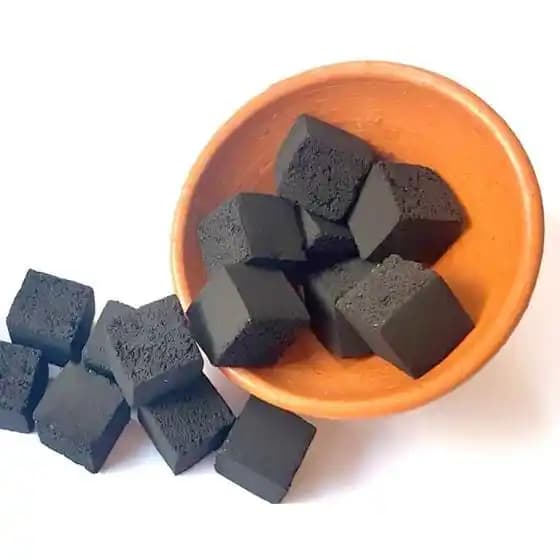
Cube Shape Coconut Shell Charcoal Briquettes
Wood briquettes' ash and sulfur content varies. Some pure wood briquettes with the bark removed can have as low as an 0.3% ash content, while briquettes with added materials can have up to a 7% ash content.[2] Briquettes have a substantially higher energy content than logs per cubic foot due to their density, which means they take up less storage space and release more heat per lb. than logs. The low moisture content of about 10% leads to an energy content of around 5.0 kWh per kg depending on the type of wood and the compression.[2]
Team Green
Cube Shape Coconut Shell Charcoal Briquettes
ManufacturerAsk for Price
Wood briquettes' ash and sulfur content varies. Some pure wood briquettes with the bark removed can have as low as an 0.3% ash content, while briquettes with added materials can have up to a 7% ash content.[2] Briquettes have a substantially higher energy content than logs per cubic foot due to their density, which means they take up less storage space and release more heat per lb. than logs. The low moisture content of about 10% leads to an energy content of around 5.0 kWh per kg depending on the type of wood and the compression.[2]
Team Green
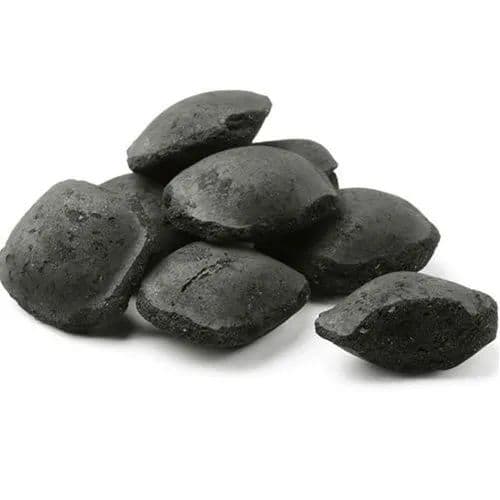
Pillow Shape Coconut Shell Charcoal Briquettes
Coal briquettes have long been produced as a means of using up 'small coal', the finely broken coal inevitably produced during the mining process. Otherwise this is difficult to burn as it is hard to arrange adequate airflow through a fire of these small pieces; also such fuel tends to be drawn up and out of the chimney by the draught, giving visible black smoke. The first briquettes were known as culm bombs and were hand-moulded with a little wet clay as a binder. These could be difficult to burn efficiently, as the unburned clay produced a large ash content, blocking airflow through a grate. With Victorian developments in engineering, particularly the hydraulic press, it became possible to produce machine-made briquettes with minimal binder content. A tar or pitch binder was used, obtained first from gas making and later from petrochemical sources. These binders burned away completely, making it a low-ash fuel. A proprietary brand of briquettes from the South Wales coalfield was Phurnacite, developed by Idris Jones for Powell Duffryn.[3][4] These were intended to emulate a high-quality anthracite coal, such as that from the Cynheidre measures. This involved blending a mixture of coals from different grades and colliery sources. Phurnacite used the following mix:[4] Bituminous coal, 25% Steam coal, 45% Dry steam coal, 22% Pitch, 8% Early briquettes were large and brick-shaped.[4] Phurnacite briquettes later adopted a squared oval shape. This regular shape packed well as a good firebed, with plentiful airflow. They are also easy to mechanically feed, allowing the development of automatically controlled heating boilers that could run for days without human intervention.
Team Green
Pillow Shape Coconut Shell Charcoal Briquettes
ManufacturerAsk for Price
Coal briquettes have long been produced as a means of using up 'small coal', the finely broken coal inevitably produced during the mining process. Otherwise this is difficult to burn as it is hard to arrange adequate airflow through a fire of these small pieces; also such fuel tends to be drawn up and out of the chimney by the draught, giving visible black smoke. The first briquettes were known as culm bombs and were hand-moulded with a little wet clay as a binder. These could be difficult to burn efficiently, as the unburned clay produced a large ash content, blocking airflow through a grate. With Victorian developments in engineering, particularly the hydraulic press, it became possible to produce machine-made briquettes with minimal binder content. A tar or pitch binder was used, obtained first from gas making and later from petrochemical sources. These binders burned away completely, making it a low-ash fuel. A proprietary brand of briquettes from the South Wales coalfield was Phurnacite, developed by Idris Jones for Powell Duffryn.[3][4] These were intended to emulate a high-quality anthracite coal, such as that from the Cynheidre measures. This involved blending a mixture of coals from different grades and colliery sources. Phurnacite used the following mix:[4] Bituminous coal, 25% Steam coal, 45% Dry steam coal, 22% Pitch, 8% Early briquettes were large and brick-shaped.[4] Phurnacite briquettes later adopted a squared oval shape. This regular shape packed well as a good firebed, with plentiful airflow. They are also easy to mechanically feed, allowing the development of automatically controlled heating boilers that could run for days without human intervention.
Team Green
Business Reviews & Ratings
Verified ratings and feedback from corporate clients sourcing from Team Green.
Based on 0 Reviews
Supplier Performance
Loading reviews...
Corporate Factsheet
| Corporate Name | Team Green |
| Company CEO | Vignesh v |
| Year Established | 2024 |
| Registered Address | 5/178, Subbe Goundenpudur, Pollachi, Coimbatore, Tamil Nadu - 642103, India |
Direct Supplier Lead
Send business requirements directly to the owner.